

Fit Learning’s math program meets students wherever they are, whether a little behind, far behind, or ready to work ahead, using an individualized structured approach that builds genuine fluency, not just memorization.


-
You want to see your child succeed in math class.
-
You suspect your child is struggling to learn new math concepts because foundational skills are missing.
-
You’re concerned about your high schooler’s performance on the math section of college entrance exams.
-
You wonder if grade inflation is hiding a problem. Your child’s math grades look fine, but you’re concerned about their understanding and retention of what they’ve learned.
As a parent, you want your child to succeed. But when math becomes a nightly struggle, it’s frustrating for everyone. Maybe you’ve spent hours helping with homework or even paid for tutoring. Perhaps assignments are getting completed, but your child still struggles to understand new concepts, remember what they’ve learned, or work independently. You’re both feeling overwhelmed, and you’re ready for something different.
Your Child CAN Learn Math
Math may be harder for your child than for some, but your child CAN learn math. With individualized instruction, systematic teaching, and practice that builds accuracy and fluency, students of all levels can develop the skills they need to understand new concepts and tackle increasingly challenging math. And with our engaging learning environment and supportive coaches, learning can be fun again.
Importantly, Fit Math isn’t only for kids who are far behind. It’s for any student who could be doing more with math, whether they need to catch up, keep up, or get ahead.
Students Who Benefit From Math Tutoring at Fit Learning St. Louis
Your student could greatly benefit from Fit Math if they:
- Are behind in math
- Struggle with math homework or learning new concepts
- Have a teacher who has raised concerns about their math skills
- Avoid math, dislike it, or experience math anxiety
- Have dyscalculia, a learning disability, or other learning differences
- Are keeping up, but something is off
- Earn good grades but struggle to remember or apply what they’ve learned
- Know how to solve problems but work too slowly to demonstrate what they know, especially on timed tests
- Are ready for more
- Are strong in math but under-challenged in the classroom
- Want to work ahead of their grade level
Our math curriculum starts with the basics, like reading numbers, and grows with your child into advanced computation. We meet your child right where they are. See the full list of skill areas in the FAQs below.
How Fit Math Stands Out from Other Math Tutors in St. Louis
Most math tutoring helps with this week’s homework. Fit Math is built to fix why the struggle keeps coming back.
We treat the cause, not the symptoms.
Traditional tutoring often focuses on the material your child is learning in class right now. For some students, that’s exactly the support they need. But when foundational skills are missing, re-explaining the current lesson may not solve the underlying problem. Your child might complete more assignments or see a temporary improvement in grades, yet continue to struggle when new concepts build on skills they haven’t mastered.
We find the gaps first.
Every Fit Math enrollment begins with a no-obligation comprehensive assessment to identify your child’s strengths and pinpoint the skills that need attention. We meet with you to review the results, then develop an individualized curriculum based on your child’s actual performance—not simply their age, grade level, or current classroom assignments.
We build the foundational skills that make advanced math possible.
Math skills build on one another. A student who struggles with place value or skip counting may find addition and subtraction increasingly difficult. The same pattern shows up later. Imagine trying to solve 6x + 5 = 29 while still struggling to recall multiplication facts: the student’s effort goes to the arithmetic instead of the algebra.
Fit Math identifies these missing building blocks and teaches them systematically. When students develop the foundational skills they need, they’re better prepared to learn and apply more advanced math concepts.
We teach skills to fluency.
At Fit Learning, accuracy is only part of mastery. We teach component skills until students can perform them both correctly and automatically. This is fluency.
Why does that matter? When basic calculations become automatic, students can devote more attention to understanding complex problems and learning new concepts. Combined with multisensory instruction, fluency training helps students build skills they can use confidently and efficiently—not just skills they can demonstrate once with help.
We measure progress and adjust instruction.
Our learning coaches monitor performance and use objective data to guide each learner’s instruction, so progress, not guesswork, determines what comes next.
We help learners at every level.
Fit Math is built for every kind of learner. Because every enrollment starts with an assessment, instruction begins exactly where your child is, and the pace adapts from there.
- A little behind: we close the specific gaps holding your child back so they can keep up with confidence.
- A lot behind: we go back as far as needed, build the foundation, and move forward at a pace that works for your child.
- Ready for more: we move your child ahead of the classroom curriculum and build the fluency to stay there.
Instruction is available in person or online for students in grades 1-12, while Lil Fits introduces younger learners to early numeracy.
Fit Math Gets Results
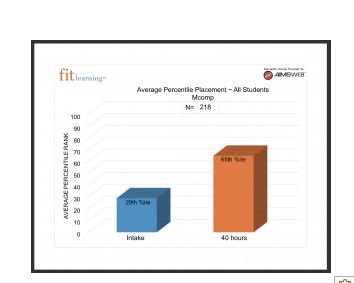
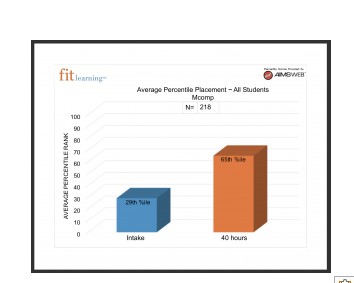
At Fit Learning, we don’t assume progress is happening. We measure it. Fit learners typically gain 1–2 years of academic progress in as little as 40 hours of instruction. The graphs below show students’ performance on standardized AIMSweb® math assessments before and after 40 hours of instruction.
Frequently Asked Questions About Math Tutoring at Fit Learning St. Louis
What math skills does Fit Math cover?
Fit Math covers math skills from first grade through high school, beginning with early foundations and building toward pre-algebra and advanced computation. Because we start with an assessment, your child works on the skills they actually need, whatever their grade level.
Some of the broad math skills covered in Fit’s curriculum include:
- Numeracy
- Computation
- Word problems
- Fractions
- Telling time
- Decimals
- Ratios
- Percents
- Money
- Measurement
- Geometry
- Pre-algebra
We teach each skill to fluency, meaning accurate and automatic, before building on it. Younger learners can start with early numeracy through Lil Fits. To see which skills your child needs, start with our math intake assessment.

How do I know which math skills my child needs help with?
Your child completes a comprehensive math skills assessment with one of our learning coaches. It pinpoints which component skills are solid, which are shaky, and whether the issue is accuracy, fluency, or both. We then meet with you to go over the results and build an individualized curriculum. The assessment is no-obligation. You can learn more on our Learning Assessments page.
What is math fluency, and why does it matter?
Fluency means a skill is both accurate and automatic. A child who has to stop and work out 7 x 8 uses up working memory that should be going toward the harder part of the problem, like solving for x. Building fluency in the basics frees up that mental bandwidth for new concepts. See The Science of Fluency for more.
My child gets decent math grades, but I feel like something is off. Could Fit Math still help?
Yes. Grades can hide gaps when a child gets assignments turned in through extra help, repetition, or partial credit, but doesn’t retain or deeply understand the material. Our assessment looks past grades to measure what your child can do accurately and automatically. Some students only need a “fluency booster” to turn skills they already have into skills they can use quickly and confidently.
Can Fit Math help my child with learning differences?
Yes. Fit Math works for learners of all abilities, including students with dyscalculia, other learning differences, or math anxiety. The pacing and the data we track adapt to your child, and the teaching approach stays grounded in the same learning science. Read more on our Special Needs page and in our guide to math anxiety.
Can Fit Learning help my high schooler prepare for the math section of the ACT or SAT?
It can. Some students struggle with accuracy, and others know the material but work too slowly to finish the section in the time allowed. The assessment shows which it is, or whether it’s both. Students who mainly need a fluency boost often reach their goals in a single enrollment. See our exam prep page for more.
 Is Fit Math available online?
Yes. Fit Math is offered in person at our Creve Coeur learning lab and through online instruction. Visit our Online Services page for details on how online sessions work.
Does my child have to be far behind to benefit from Fit Math?
No. Fit Math is for students at every level. Because we start with an assessment, instruction begins where your child is and adapts from there, whether that means closing a few gaps, rebuilding a foundation, or moving well ahead of the classroom curriculum. Students who are already doing well, or who are bored and under-challenged in class, can work at a more advanced level and build the fluency that helps them stay ahead. See our Gifted Students page.
Can Fit Math help my child who understands math but makes careless mistakes?
Yes. A child may understand a math concept but still struggle to apply it consistently and accurately. Sometimes, foundational skills aren’t yet fluent enough, making it harder to focus on more complex problems. What looks like a careless mistake may reflect a skill that needs more practice to become reliable and automatic.
Does Fit Learning offer any other tutoring programs besides math?
Absolutely. Our St. Louis area learning lab also offers Fit Reading, Fit Logic, Fit Writing, and Fit Homeschool, plus supplemental literacy services in penmanship and spelling. Lil Fits serves preschool-age learners, and we have programs for gifted students and students with special learning needs.
Get Math Help for Your Child in the St. Louis Area
If math has become a source of frustration for your child, or if their grades don’t reflect what they truly know, you don’t have to keep guessing what might help. Whatever your child’s starting point, the first step is the same: a comprehensive math assessment that shows where they are now and what skills they need to develop next.
To get started:
- Contact Fit Learning St. Louis to discuss your child’s needs.
- Schedule a no-obligation math assessment.
- Work with our team to build a plan for your child’s academic growth.
Your child doesn’t have to remain stuck in math. Let’s find out what’s getting in the way and how we can help.
More Information
- Parent’s Guide to Fit Learning St. Louis
- Frequently Asked Questions about Fit Learning
- Online Math Tutoring
- Math Anxiety in St. Louis Kids: Signs, Causes, and How to Help
- Is Your Child Struggling with Reading or Math? 7 Fluency Tips from a St. Louis Learning Expert
- Research-Based Practices to Alleviate Test Anxiety
- Private Tutoring Vs. Specialized Schools: What’s Right for Your St. Louis Child?
- Does AI Mean Kids Don’t Need Tutoring Anymore? Not Even Close.
- The Science of Fluency: Why St. Louis Kids Excel Faster at Fit Learning